
 Image 1 of 3
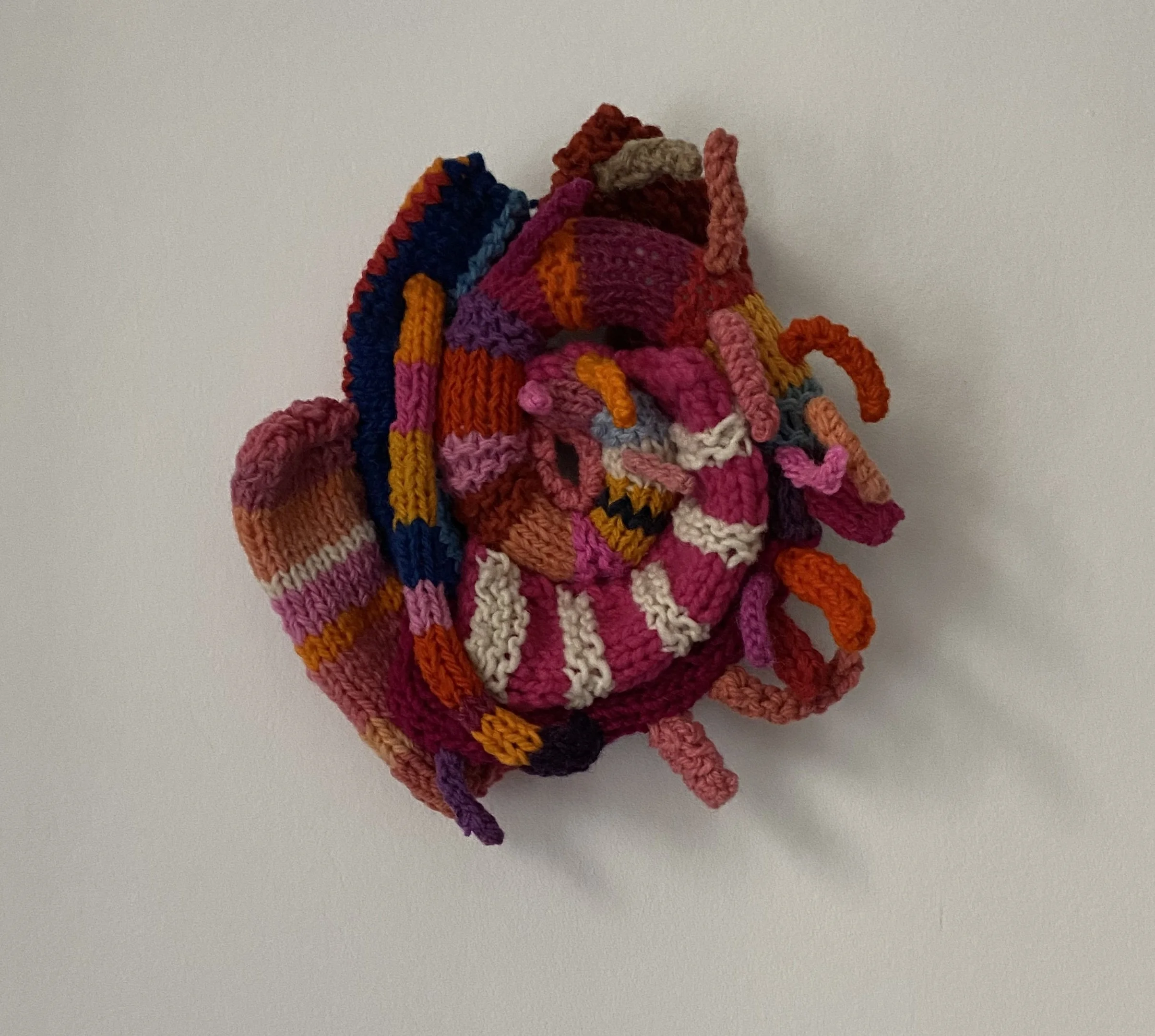 Image 2 of 3
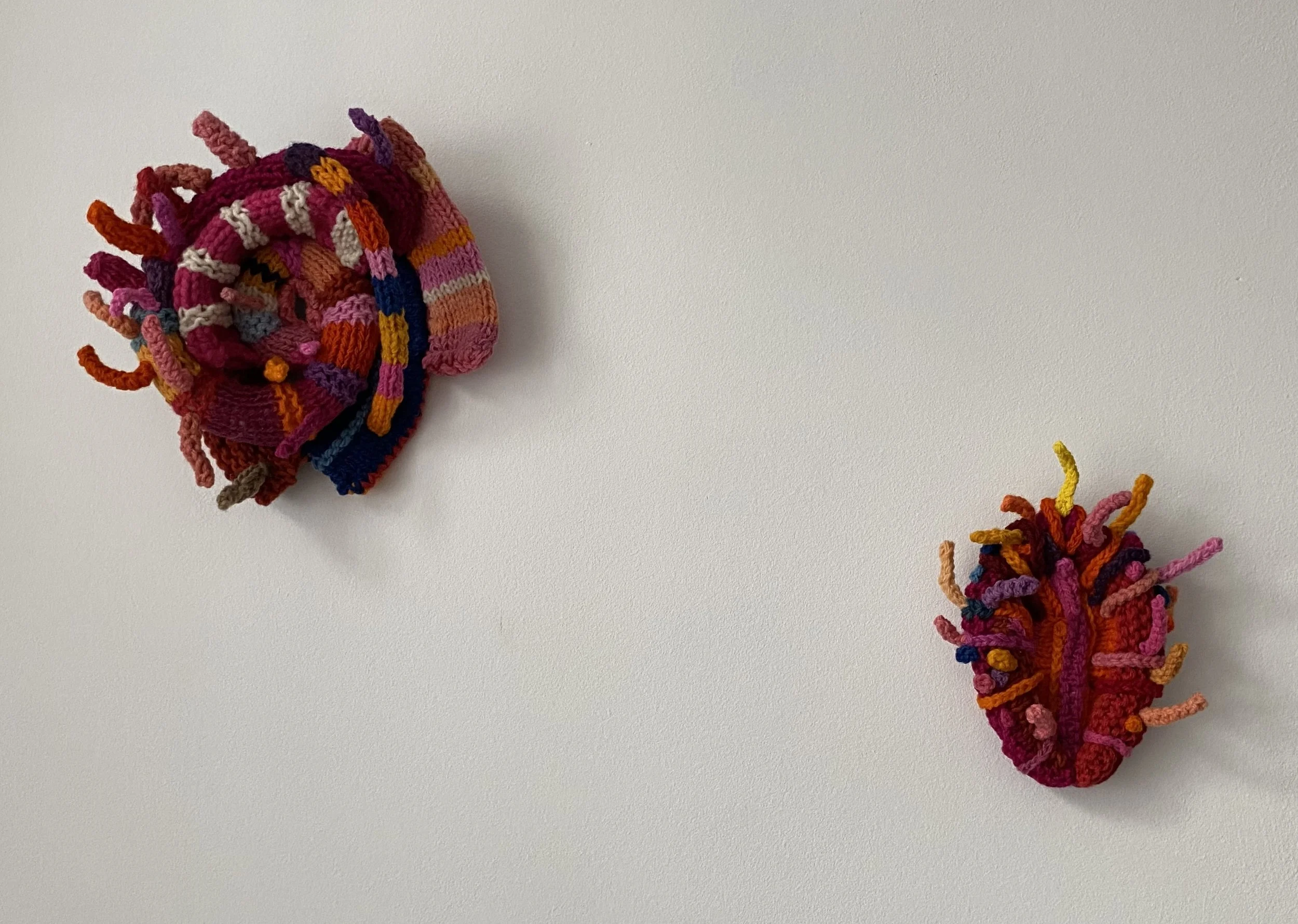 Image 3 of 3
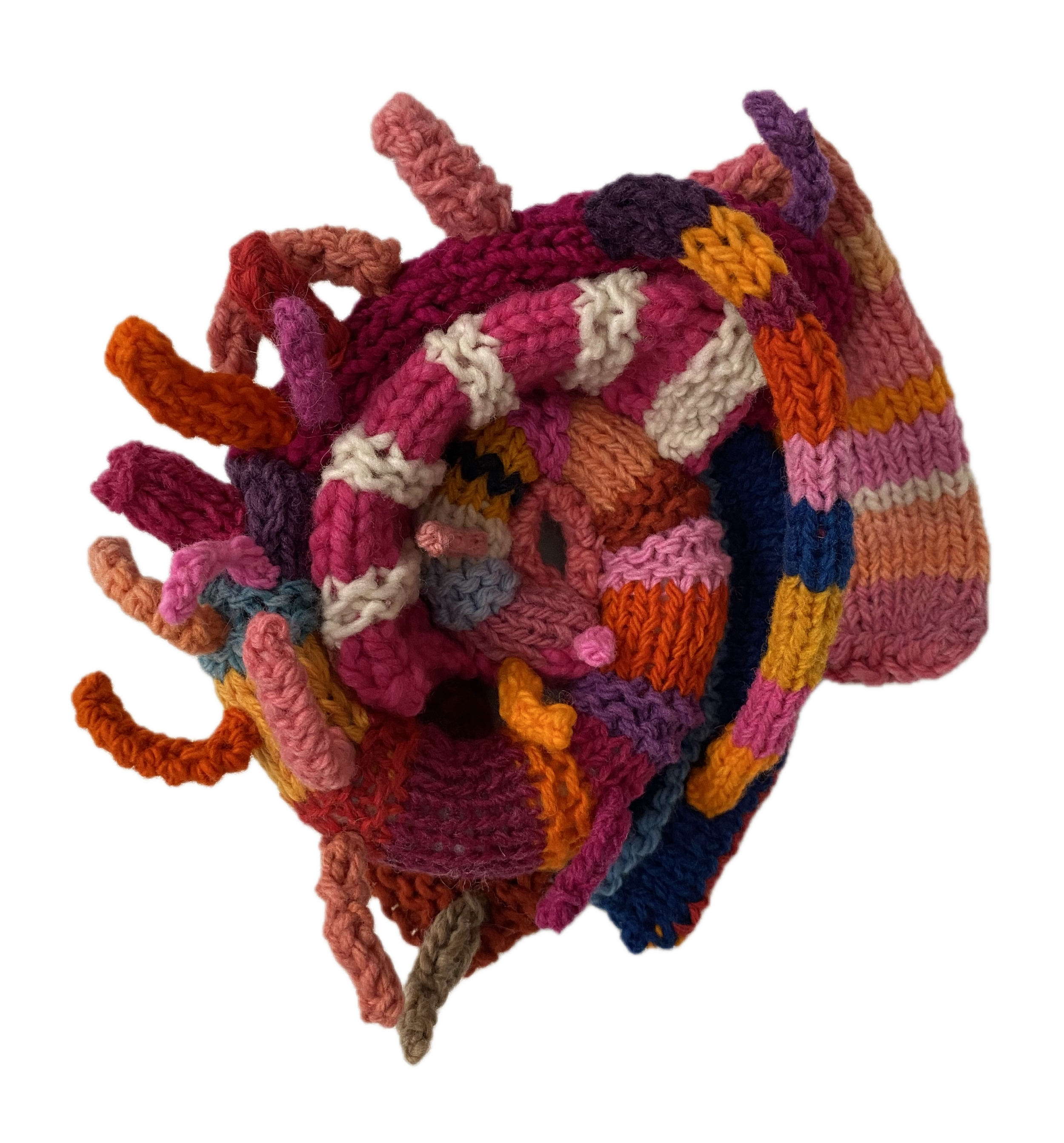
Warmi atiyniyuq (Powerful Woman)
Hand-knitted sheep’s wool, natural dyes (including cochineal)
Sumaq warmi and Warmi atiyniyuq are part of Dominguez’s ongoing series Warmi, a Quechua word meaning “woman.” The sculptures draw inspiration from the colorful spiny oysters (Spondylus). Prized by pre-Columbian Andean cultures for their beauty and for their associations with fertility, femininity, and abundance, they were often incorporated into jewelry and sculptures.
The vulva-like forms reflect Dominguez’s fascination with femininity as a generative, life-giving force, and source of creative power.
Dominguez’s work is embedded in ancient Peruvian material culture and textile practices. She handknit her pieces from sheep’s wool—some of which originated from Huacrachuco, the birthplace of her Incan ancestors—that she then dyed with natural pigments, including the historically significant cochineal red dye that is derived from insects.
About the Artist:
Ariana Macedo Dominguez, Lima, Peru
Through embroidery, weaving, painting, drawing, and performance, Ariana reflects on motherhood, daily care, and the cultural heritage of her Incan ancestors. Her work explores how family bonds and memories are transmitted across generations, passed from mother to child, and borne on the body.
Warmi atiyniyuq (Powerful Woman)
Hand-knitted sheep’s wool, natural dyes (including cochineal)
Sumaq warmi and Warmi atiyniyuq are part of Dominguez’s ongoing series Warmi, a Quechua word meaning “woman.” The sculptures draw inspiration from the colorful spiny oysters (Spondylus). Prized by pre-Columbian Andean cultures for their beauty and for their associations with fertility, femininity, and abundance, they were often incorporated into jewelry and sculptures.
The vulva-like forms reflect Dominguez’s fascination with femininity as a generative, life-giving force, and source of creative power.
Dominguez’s work is embedded in ancient Peruvian material culture and textile practices. She handknit her pieces from sheep’s wool—some of which originated from Huacrachuco, the birthplace of her Incan ancestors—that she then dyed with natural pigments, including the historically significant cochineal red dye that is derived from insects.
About the Artist:
Ariana Macedo Dominguez, Lima, Peru
Through embroidery, weaving, painting, drawing, and performance, Ariana reflects on motherhood, daily care, and the cultural heritage of her Incan ancestors. Her work explores how family bonds and memories are transmitted across generations, passed from mother to child, and borne on the body.