

MOSS COLLECTION
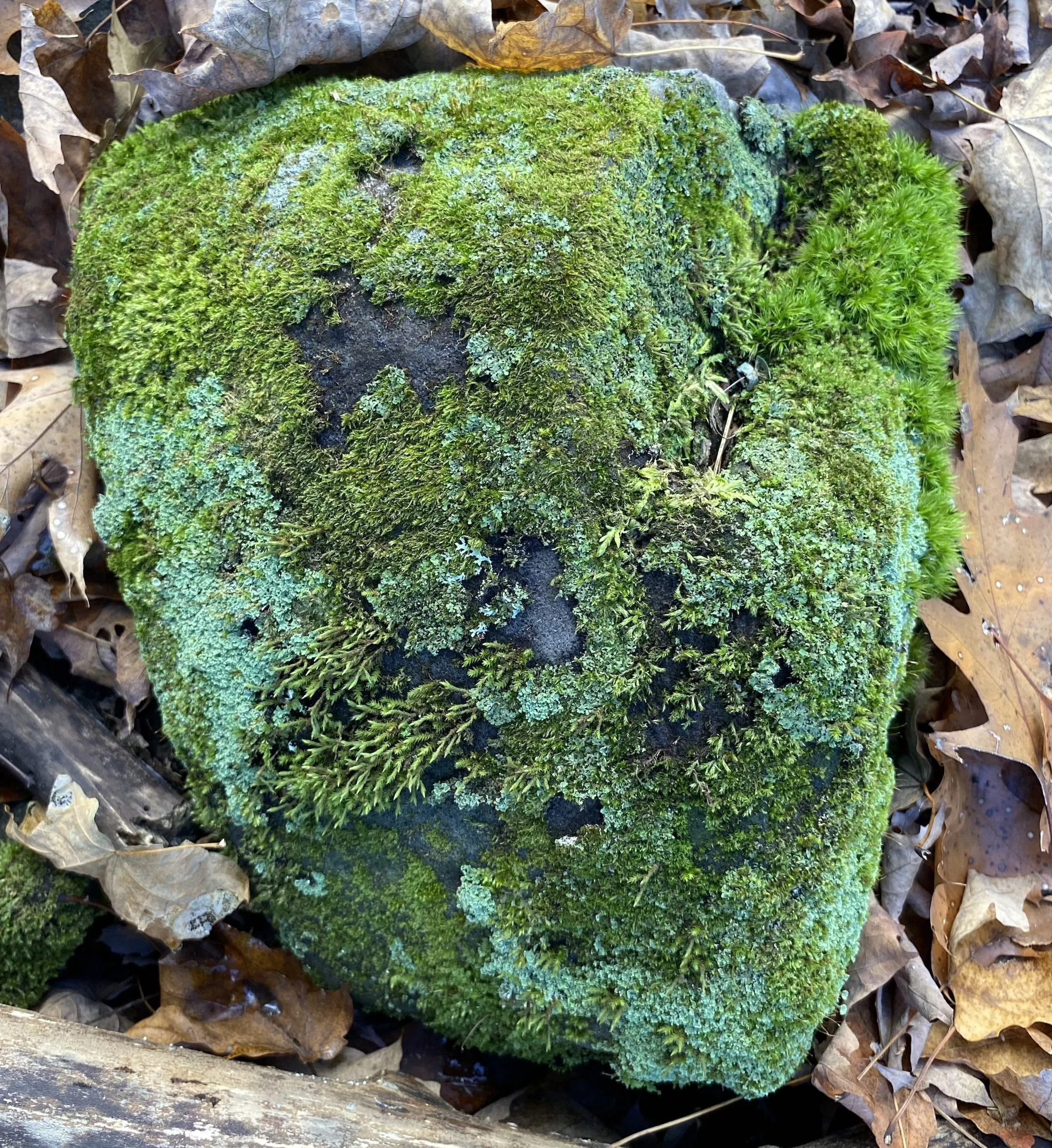
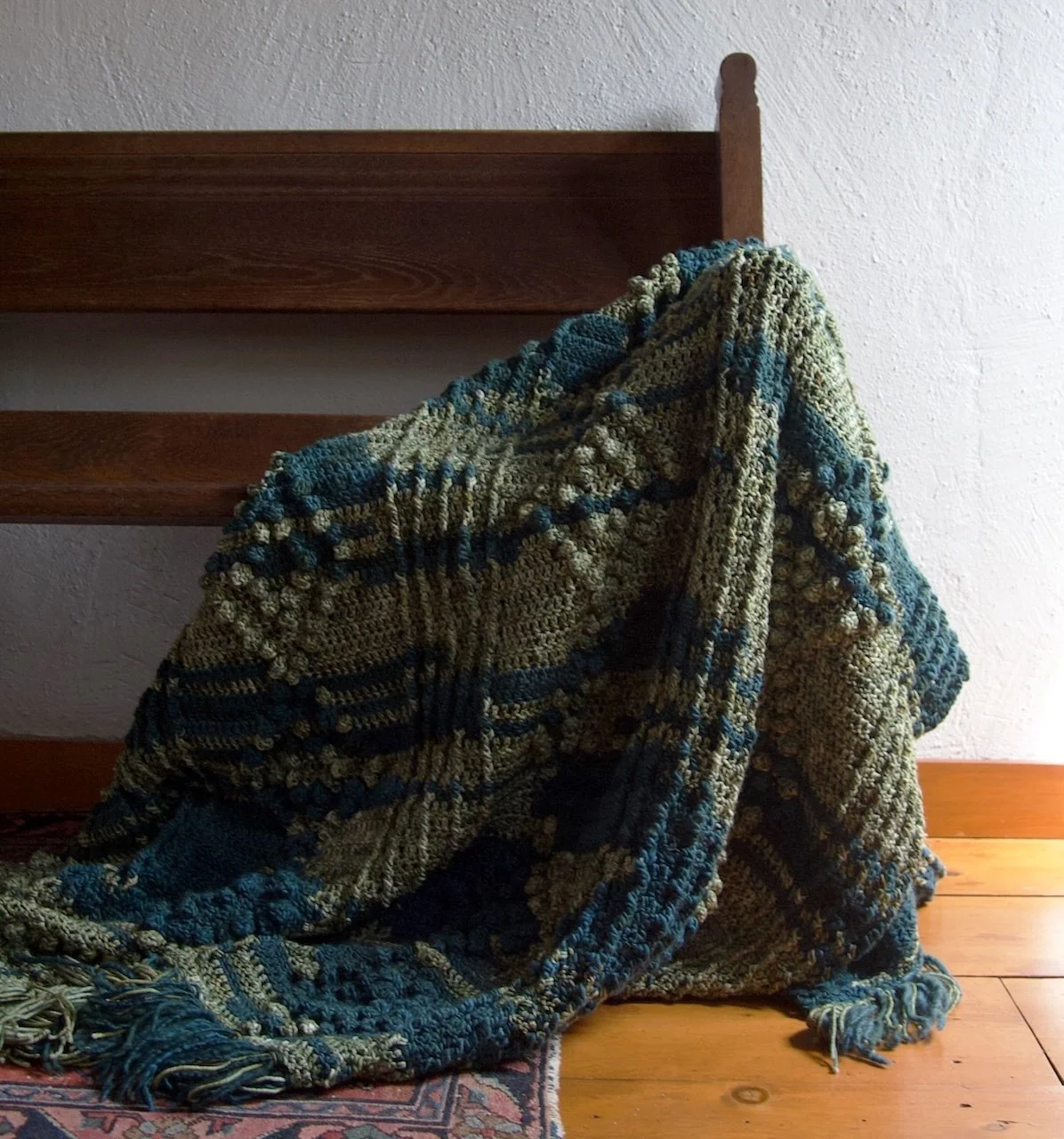
Inspired by the Japanese practice of shinrin-yoku (forest bathing), our vision was to capture the varied colors and textures of moss—shifting greens, browns, and grays—within a substantial, hand-crafted textile.
We turned to fiber artist Tina Yesanofski of Allentown, Pennsylvania to make our forest bathing dreams come true. Tina dedicated more than sixty hours crocheting the afghan with the traditional “moss stitch,” a knot whose layered, pebbled texture beautifully mimics the look of living moss.
Designed to last for generations, this queen-sized blanket is both a tactile comfort and a visual homage to the forest bed.
About the Artist:
Tina Yesanofski has been working as an artist for over a decade. After a diagnosis of a chronic fatigue syndrome (ME/CFS) limited her mobility, she found new creative expression in crochet, creating heirloom-quality textiles in wool.
Origin: Handwoven in Allentown, Pennsylvania
Materials: 100% merino wool ethically sourced from Peru and Uruguay; hand-dyed in Texas
Dimensions: Queen size: 59 in × 65 in, without tassels (150 cm x 165 cm, without tassels)
Weight: 5 lbs (2.27 kg)
Care Instructions:
To preserve the beauty and longevity of your handmade wool afghan, please follow these care instructions:
Gentle cleaning: Spot clean with a damp cloth and mild detergent when needed. For full washing, hand wash gently in cold water or use a delicate wool cycle on your machine.
Drying: Lay flat to dry, reshaping as necessary. Avoid wringing or twisting to prevent distortion.
Storage: Store folded in a breathable cotton bag or wrapped in acid-free tissue paper. Avoid plastic bags which can trap moisture.
Protection: Keep away from direct sunlight to prevent fading, and protect from moths using natural repellents like cedar blocks or lavender sachets.
Moss invites us to see differently, to notice what endures and connects all things.
Each work in this collection responds to moss in form or spirit: its softness, patience, and quiet vitality. Some pieces include moss itself; others echo its textures and lines. Together they reflect a shared reverence for nature’s subtle, enduring beauty.

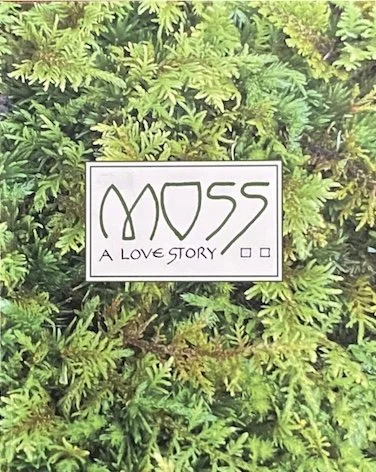
Moss: A Love Story is an illustrated book documenting an obsession with moss that developed during a period of illness and isolation. What began as observation and research soon expanded into a collaborative exploration: cultural historian and Spring Moon Design founder Michelle Standley invited artists and artisans from France, Mexico, Poland, Ireland, British Columbia, and the United States to interpret moss through their own mediums.
The book focuses on five moss species and unfolds in many forms: illustrations, photographs, watercolors, maps, poems, even a crossword puzzle and a recipe for moss flatbread. It also documents the original objects created for the project: a hand-crocheted blanket, a mohair wool scarf, wolf-moss–dyed headbands, ceramic vases, and a handcrafted music box with an original score.
Blending art, design, history, literature, and botany, Moss: A Love Story traces moss’s quiet presence across landscapes and imaginations worldwide: as an object of fascination, a metaphor for care and survival, and a testament to the beauty of small things.
About the Author:
Michelle Standley is a cultural historian, writer, editor, and artist based in Berlin and New York. She has a PhD in History from New York University.
Publisher: Spring Moon Design, 2025
Format: Softcover, 256 pages
Dimensions: 9 in x 7.5 in (23 cm x 19 cm)
Weight: 14 oz (400 g)
Edition: Limited edition of 20, numbered and signed by author.
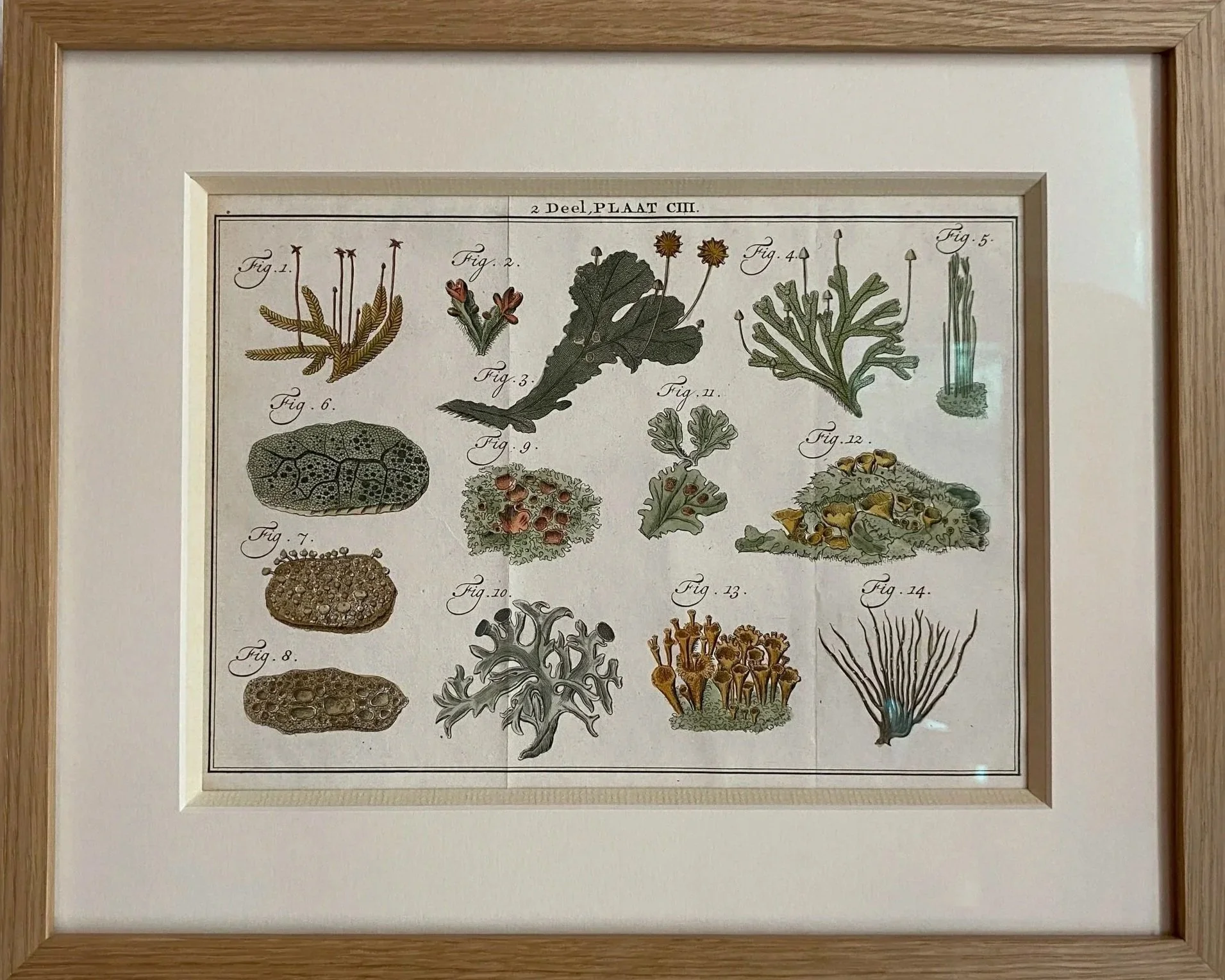
This rare copperplate engraving, hand-colored on handmade verge paper, depicts fourteen varieties of lichen. It comes from Natuurlyke Historie of Uitvoerige Beschryving der Dieren, Planten en Mineraalen (Natural History or Extensive Description of Animals, Plants and Minerals), a monumental 37-volume work published in Amsterdam between 1761 and 1785. The text, a Dutch translation by Martinus Houttuyn of Carl Linnaeus’s Systema Naturae, helped lay the foundations of modern taxonomy.
We sourced this hand-colored lichen print from Pictura Antique Prints in Overasselt, Netherlands, a gallery founded by former landscape architect Peter Cornelissen, whose clients include the Metropolitan Museum of Art and the Rijksmuseum.
The museum-quality birch frame and archival mounting add a further layer of craftsmanship. Inspired by a delicate beveled window mat spotted at a Japanese antique dealer in Paris’s 6th Arrondissement, we collaborated with a Berkshires framing studio to recreate the look. The result is a setting that draws the eye to the engraving’s fine detail with understated elegance. UV-protective glass ensures the colors remain vivid for generations.
Origin: From Natuurlyke Historie, Amsterdam, Netherlands
Materials: Copperplate engraving on hand-colored verge paper; birch frame and archival mounting and UV-protective glass
Dimensions: Print measures 10.6 in × 8.3 in (27 cm x 21 cm) ; frame measures 14 in × 11.25 in × .75 in (35.5 cm x 28.5 cm x 2 cm)
Weight: 1 lb (450 grams)
Year/s: 1761–1785
Notes: Certificate of authenticity included
Antique print from Amsterdam.
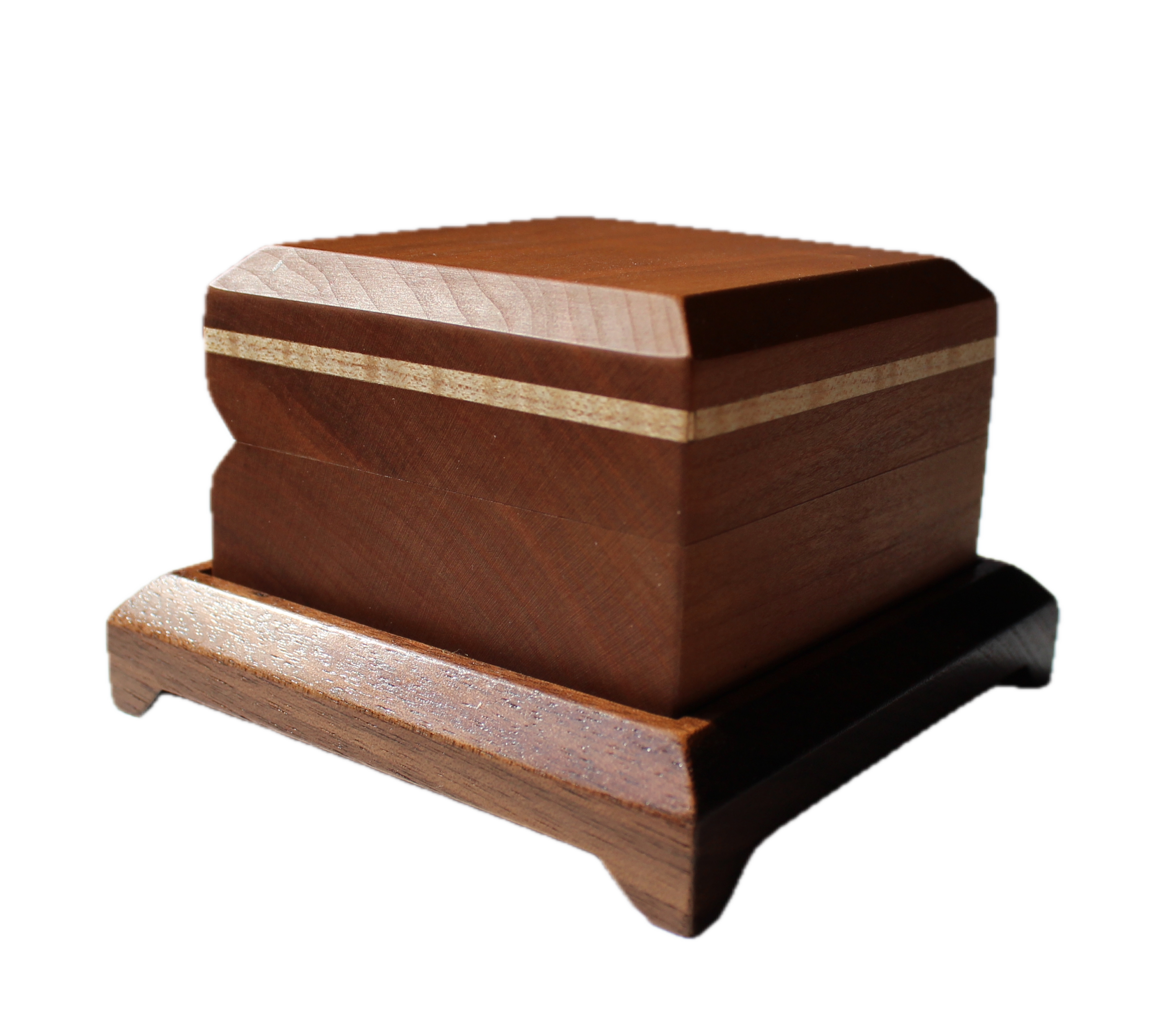
This singular music box was conceived from a simple question: if moss could make music, what would it sound like? The result is an original composition by Dublin-born composer Brian Ledwidge Flynn, distilled into a delicate melody and housed in a handcrafted wooden box by Montana woodworker Nathan Standley.
The piece began as an ambient score titled Hypnum #2—lush, ethereal, and expansive. To suit the constraints of the mechanism, Flynn transformed it into a childlike, haunting melody that captures the stillness and layered intricacy of moss. Its effect is both ethereal and grounding: a private concert in miniature, alive with the stillness of moss.
We also put a lot of thought into the box itself. After months of experimenting with vintage models and European prototypes, we turned to Standley, a master craftsman. He created an elegant box of cherry and maple, paired with a matching stand, designed to cradle and amplify the music within. It is designed to be held close: a tactile, heirloom object that is both instrument and art.
About the Makers:
Brian Ledwidge Flynn is a composer and music theorist whose work explores the interplay of atmosphere, memory, and sound. Originally from Dublin, where he earned a master’s degree in music, Brian now resides in Dortmund, Germany.
Nathan Standley is a Montana-based woodworker with over thirty years of experience crafting bespoke furniture and objects.
Origin: Dortmund, Germany; Hamilton, Montana
Materials: Brass mechanism, cherry and maple wood
Dimensions: 3 in × 3 in × 2 in (7.5 cm x 5 cm); stand: 4 in x 4 in x .75 in (10 cm x 10 cm x 2 cm)
Weight: 12 oz (340 grams)
Edition: One of a kind, created exclusively for Spring Moon Design.
The Moss Library
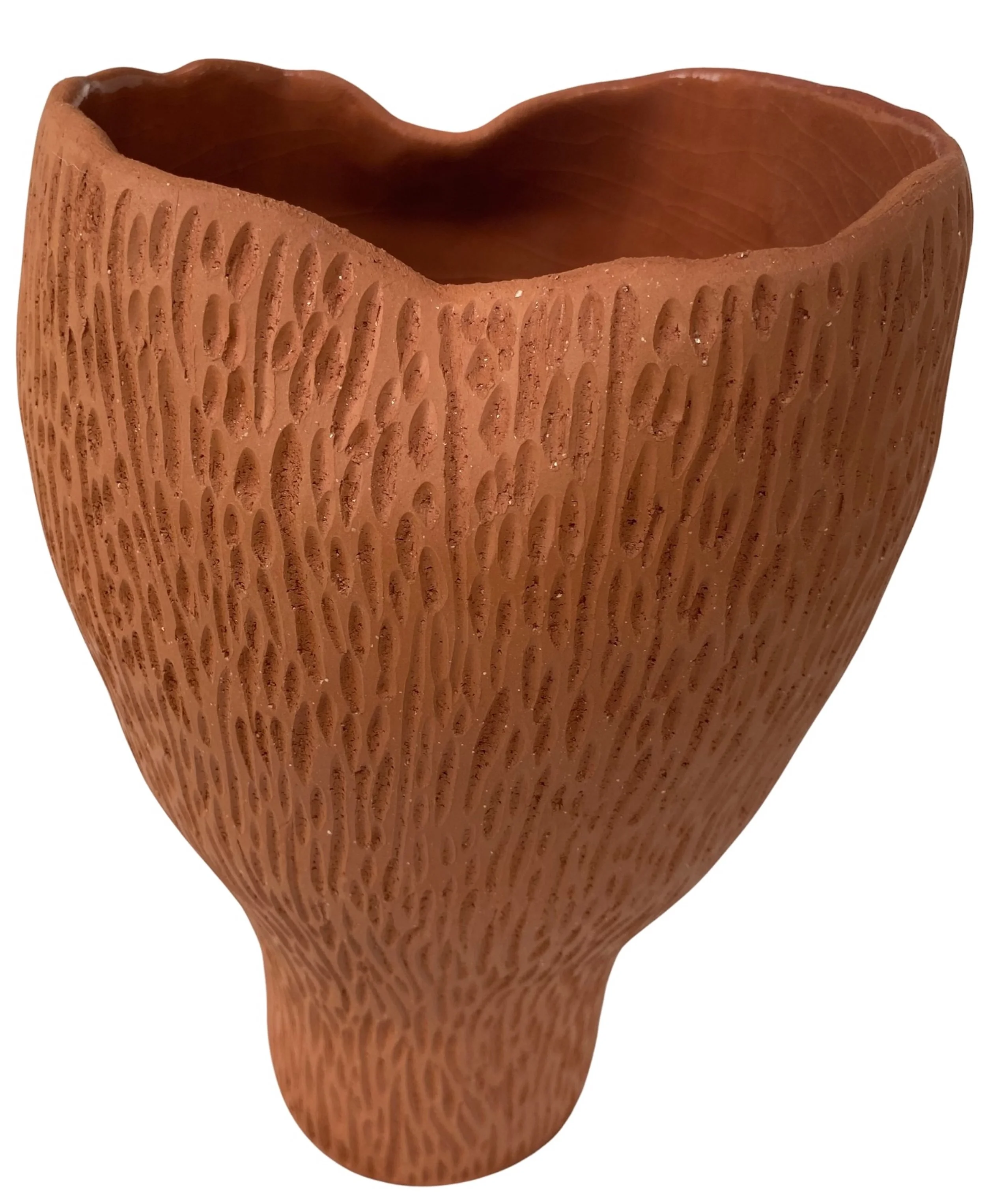
By reducing moss to its purest form, this ceramic vase invites you to appreciate the beauty of moss structure, line, and repetition, embodying the spirit of Japanese philsopher Soetsu Yanagi’s observation, “A pattern is a depiction of an object’s quintessential nature.”
This handcrafted clay vase created exclusively for Spring Moon Design draws from the delicate, repeating structures of Polytrichum moss. While researching moss, artist Briana Trujillo was struck by the undulating lines of its cellular form. What began as a sketch evolved through prototypes into a vessel that captures the rhythm of growth and the interplay of light and shadow.
The transparent glaze, applied only to the interior, reveals subtle rings, natural traces from the firing process that echo the organic irregularities of moss itself. These surface variations are part of each vase’s singular character. Like its botanical inspiration, the vase has no front; each angle reveals a new relationship between curve and line.
About the Artist:
Raised between Playa de Tijuana and San Diego, Briana’s work draws inspiration from the colors and flora and fauna of her youth, blending cultural memory with an eye for natural geometry. Briana is now based in Montpellier, France.
Origin: Montpellier, France
Materials: Terracotta clay, matt glaze
Dimensions: 7 in × 11 in; 4 in base diameter (18 cm x 28 cm; 10 cm base diameter)
Weight: 2.5 lbs (1 kg)
Notes: One of a kind, created exclusively for Spring Moon Design.
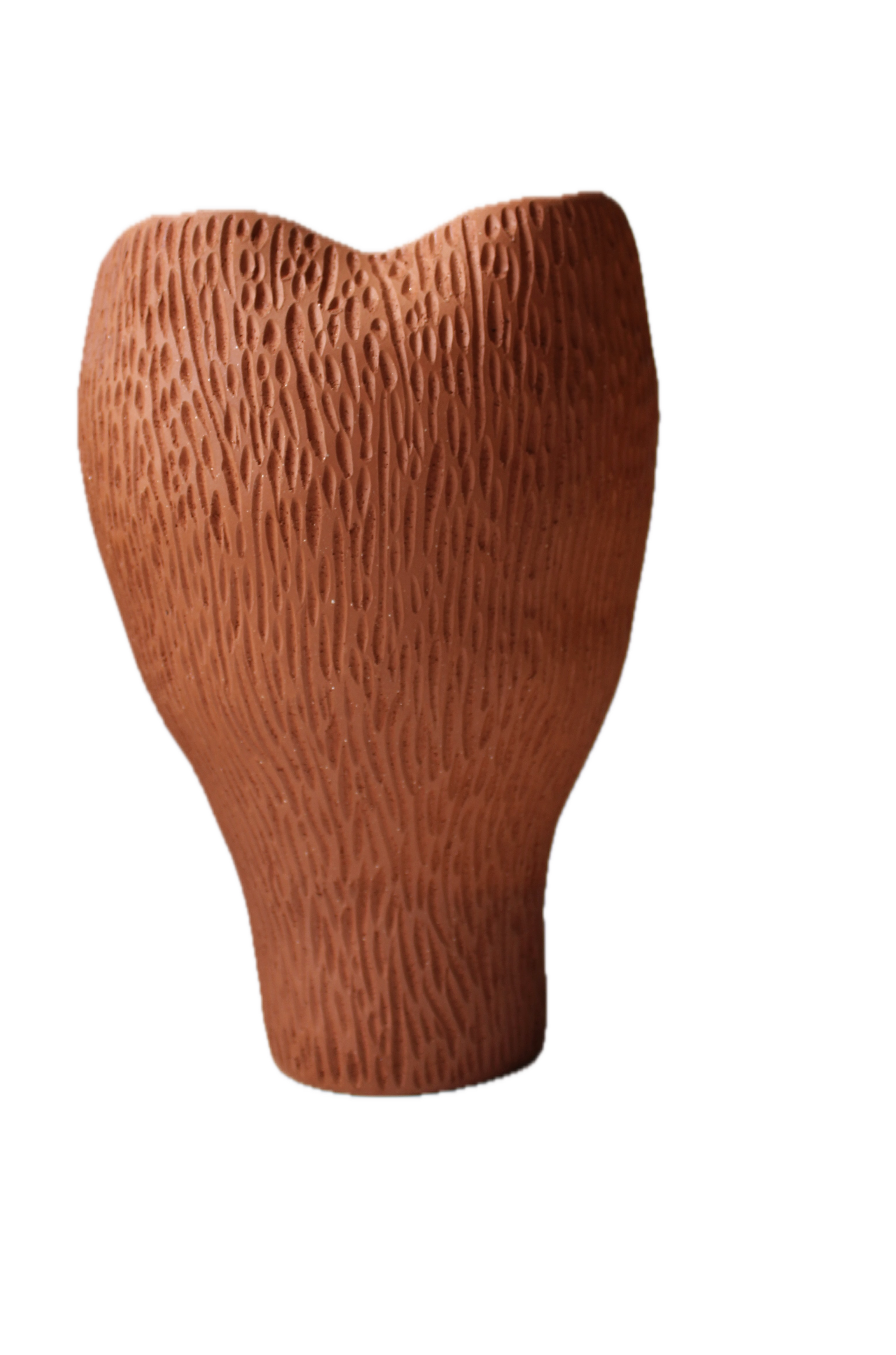

By reducing moss to its purest form, this ceramic vase invites you to appreciate the beauty of moss structure, line, and repetition, embodying the spirit of Japanese philsopher Soetsu Yanagi’s observation, “A pattern is a depiction of an object’s quintessential nature.”
This handcrafted clay vase created exclusively for Spring Moon Design draws from the delicate, repeating structures of Polytrichum moss. While researching moss, artist Briana Trujillo was struck by the undulating lines of its cellular form. What began as a sketch evolved through prototypes into a vessel that captures the rhythm of growth and the interplay of light and shadow.
The transparent glaze, applied only to the interior, reveals subtle rings, natural traces from the firing process that echo the organic irregularities of moss itself. These surface variations are part of each vase’s singular character. Like its botanical inspiration, the vase has no front; each angle reveals a new relationship between curve and line.
About the Artist:
Raised between Playa de Tijuana and San Diego, Briana’s work draws inspiration from the colors and flora and fauna of her youth, blending cultural memory with an eye for natural geometry. Briana is now based in Montpellier, France.
Origin: Montpellier, France
Materials: Terracotta clay, matt glaze
Dimensions: 7 in × 10 in ; 3 in across the base (18 cm x 25.5 cm x 7.5 cm)
Weight: 1.5 lbs (680 grams)
Notes: One of a kind, created exclusively for Spring Moon Design.
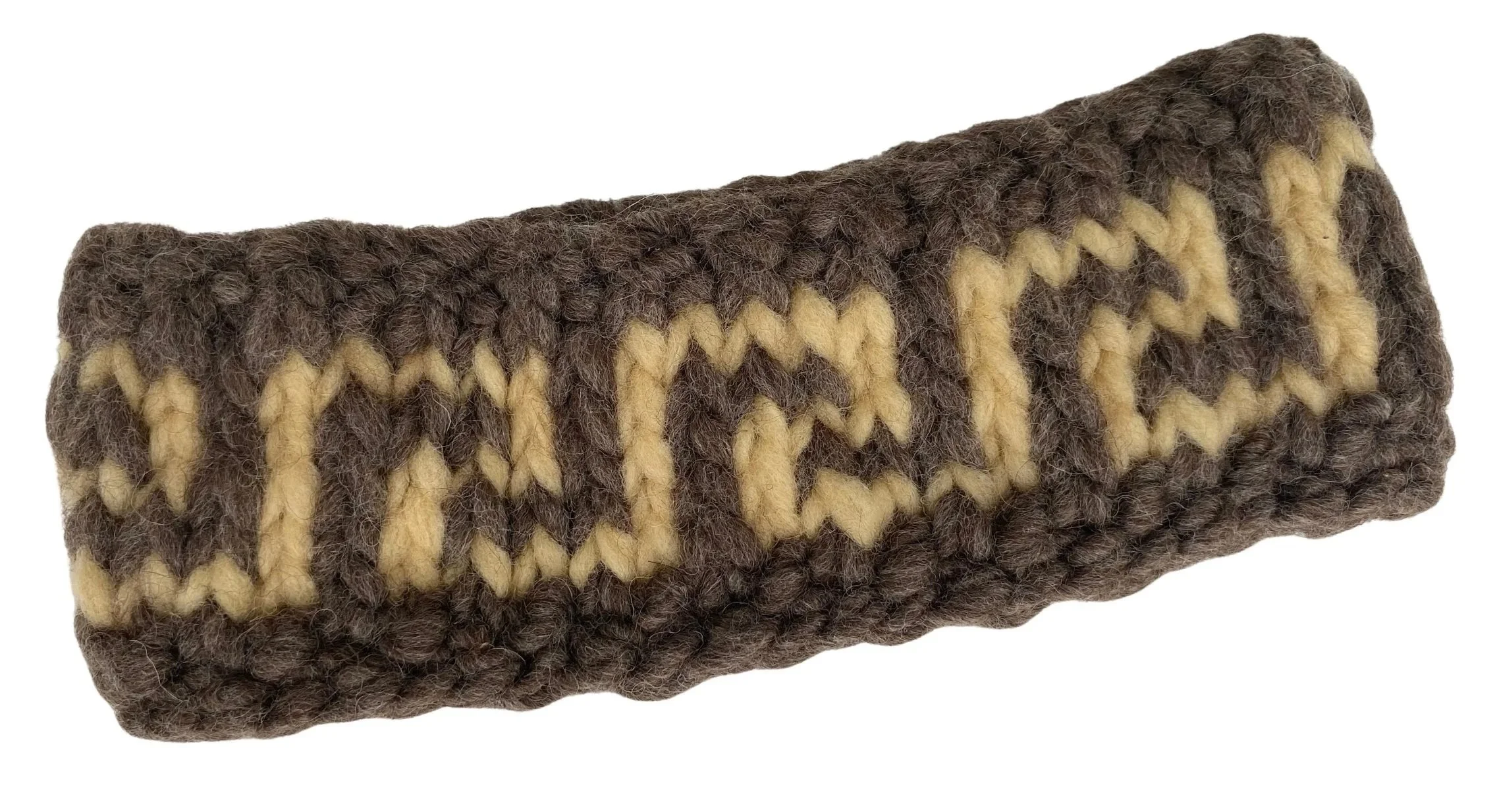
Handwoven and naturally dyed with wolf moss (Letharia vulpina), this 100% wool, handwoven, brown-and-cream headband with an abstracted wave pattern was created exclusively for Spring Moon Design. It comes from Haida Gwaii, the ancestral homeland of the Indigenous Haida people of the Pacific Northwest. The luminous yellow-green lichen, gathered from local conifers, has long been used in Haida weaving, infusing textiles and regalia with color drawn directly from the forest.
We first encountered Haida art in Seattle, where totem poles, spruce-root baskets, and woven regalia left a lasting impression. Learning that wolf moss continues to play a role in Haida weaving, we sought out artist Ariane Xay Kuyaas Medley, who created a ghostface necklace for our Moss Collection. Ariane then introduced us to her mother, master weaver Alice Montjoy. From gathering the lichen to preparing the dye, Alice carries the process from start to finish: hand-dyeing the wool and weaving each headband with traditional Haida motifs, such as waves that echo the rhythms of nature.
Each headband is unique, reflecting the natural variation of the dye. Soft yet durable, it offers both heritage craftsmanship and contemporary wearability.
About the Artist:
Alice Montjoy is a Haida master weaver from Haida Gwaii, British Columbia. Alice harvests and prepares her own weaving materials.
Origin: Haida Gwaii, British Columbia, Canada
Materials: Wolf moss-dyed wool
Dimensions: 10 in x 3.5 in (26.5 cm x 9 cm)
Weight: 2 oz (55 grams)
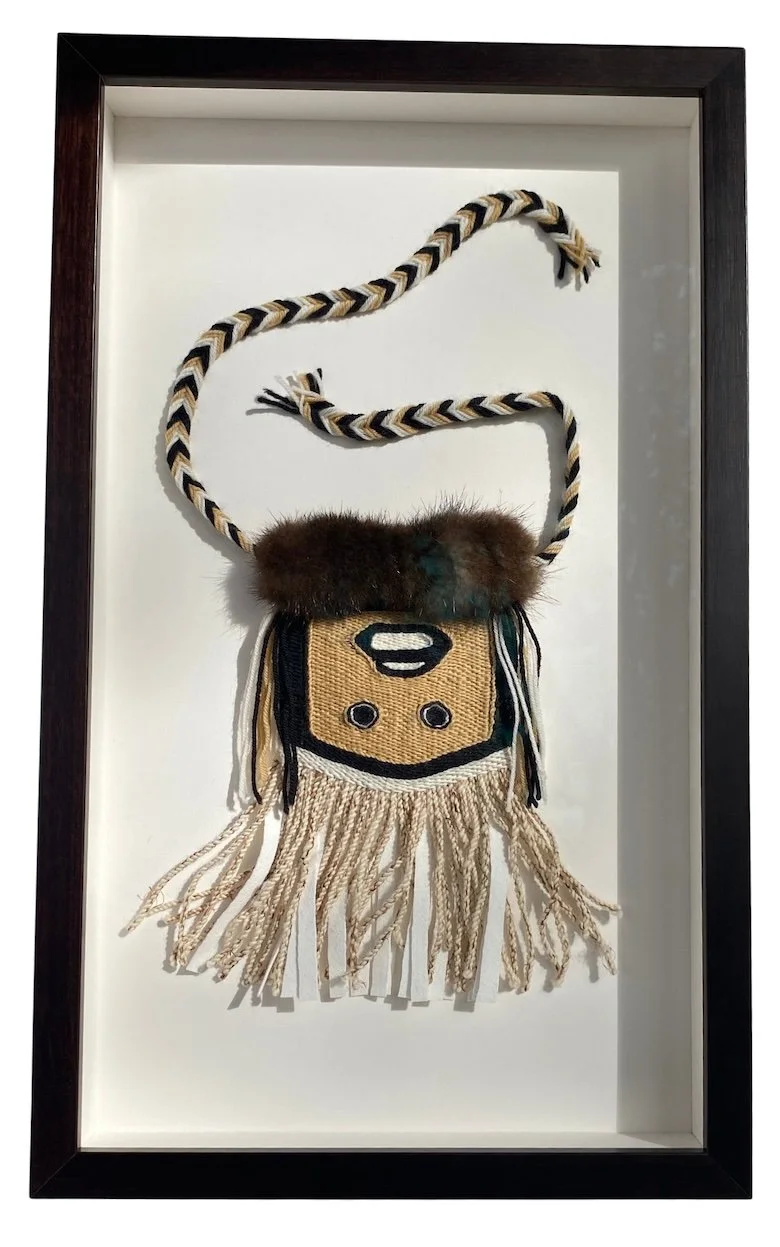
The Haida Ghostface Necklace is a striking handwoven piece, dyed with the luminous yellow-green of wolf moss (Letharia vulpina). Created by Haida artist Ariane Xay Kuyaas Medley, the necklace reflects both ancestral practice and living tradition, rooted in the Haida Gwaii Archipelago—homeland of the Indigenous Haida people of the Pacific Northwest.
Wolf moss, gathered from local conifers, has long been used in Haida weaving as a natural dye. Its radiant hue infuses garments and regalia with color drawn directly from the forest. Ariane continues this practice, blending cultural heritage with contemporary artistry.
We first encountered Haida art during our years in Seattle, where totem poles, spruce-root baskets, and woven red-and-black regalia filled us with awe. Learning that wolf moss still plays a role in Haida weaving, we sought out Ariane, who created this necklace for us. Her mother, Alice Montjoy, also created wolf moss-dyed headbands for our Moss Collection, a collaboration rooted in intergenerational artistry.
About the Artist:
Ariane Xay Kuyaas Medley (Precious Weaver) is a Haida artist from Old Massett Village on Haida Gwaii. A member of the Yaghujaanaas Raven clan, she comes from a distinguished line of Haida weavers. Ariane harvests and prepares her own weaving materials and works in both spruce-root and wool textiles.
Origin: Haida Gwaii Archipelago, British Columbia, Canada
Materials: Wolf moss-dyed wool and cotton thread; stained walnut, shadow box frame with archival mounting and UV-protective glass
Dimensions: Face is 8 in x 3.75 in (20.25 cm x 9.5 cm); ties are 11 in (28 cm); Frame is 19 in x 11.5 in x 2 in (48.25 cm x 29 cm x 5 cm)
Weight: 2.5 lbs (1 kg)
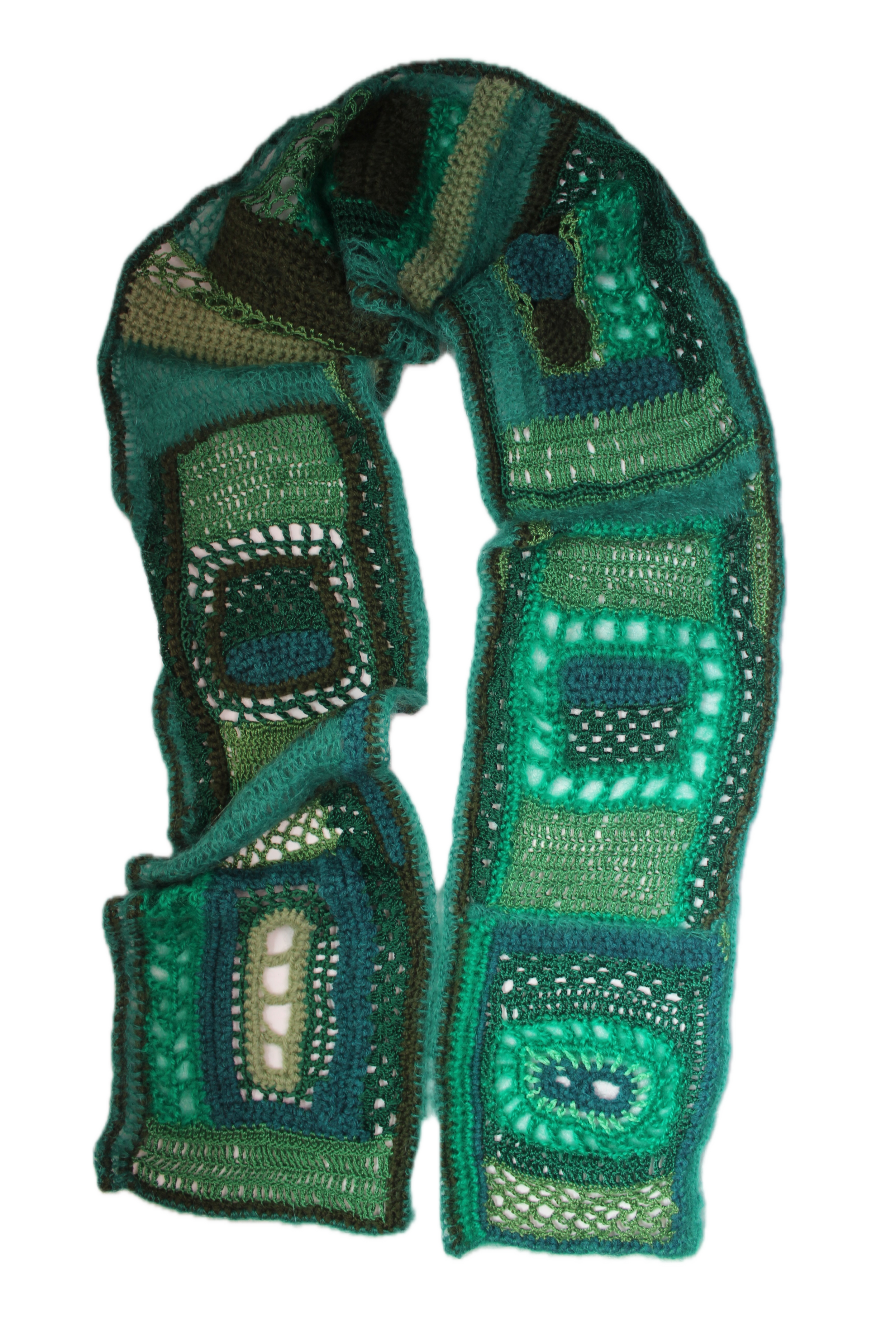
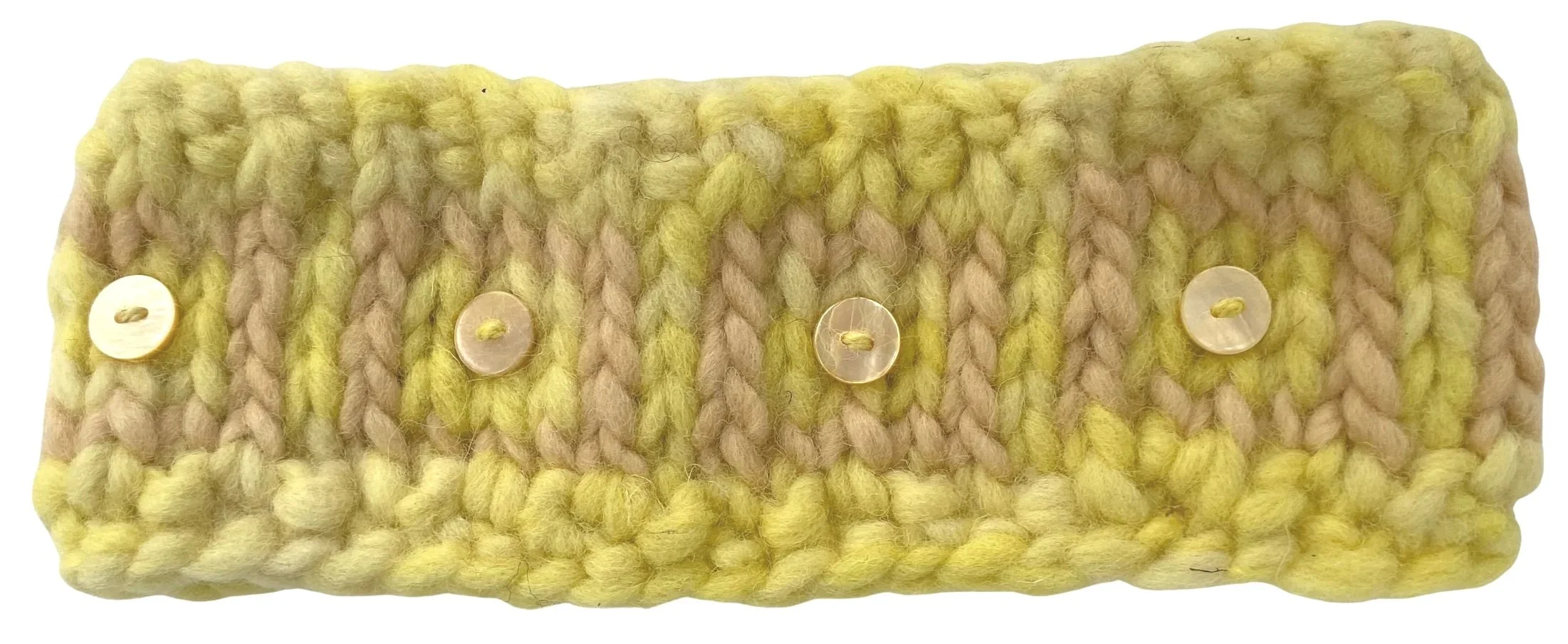
Handwoven and naturally dyed with wolf moss (Letharia vulpina), this 100% wool, handwoven, yellow headband with mother-of-pearl buttons was created exclusively for Spring Moon Design. It comes from Haida Gwaii, the ancestral homeland of the Indigenous Haida people of the Pacific Northwest. The luminous yellow-green lichen, gathered from local conifers, has long been used in Haida weaving, infusing textiles and regalia with color drawn directly from the forest.
We first encountered Haida art in Seattle, where totem poles, spruce-root baskets, and woven regalia left a lasting impression. Learning that wolf moss continues to play a role in Haida weaving, we sought out artist Ariane Xay Kuyaas Medley, who created a ghostface necklace for our Moss Collection. Ariane then introduced us to her mother, master weaver Alice Montjoy. From gathering the lichen to preparing the dye, Alice carries the process from start to finish: hand-dyeing the wool and weaving each headband with traditional Haida motifs, such as waves that echo the rhythms of nature.
Each headband is unique, reflecting the natural variation of the dye. Soft yet durable, it offers both heritage craftsmanship and contemporary wearability.
About the Artist:
Alice Montjoy is a Haida master weaver from Haida Gwaii, British Columbia. Alice harvests and prepares her own weaving materials.
Origin: Haida Gwaii, British Columbia, Canada
Materials: Wolf moss-dyed wool
Dimensions: 9.5 in x 3.5 in (24 cm x 9 cm)
Weight: 2 oz (55 grams)

Handwoven and naturally dyed with wolf moss (Letharia vulpina), this 100% wool, handwoven, yellow-and-brown headband with an abstracted wave pattern was created exclusively for Spring Moon Design. It comes from Haida Gwaii, the ancestral homeland of the Indigenous Haida people of the Pacific Northwest. The luminous yellow-green lichen, gathered from local conifers, has long been used in Haida weaving, infusing textiles and regalia with color drawn directly from the forest.
We first encountered Haida art in Seattle, where totem poles, spruce-root baskets, and woven regalia left a lasting impression. Learning that wolf moss continues to play a role in Haida weaving, we sought out artist Ariane Xay Kuyaas Medley, who created a ghostface necklace for our Moss Collection. Ariane then introduced us to her mother, master weaver Alice Montjoy. From gathering the lichen to preparing the dye, Alice carries the process from start to finish: hand-dyeing the wool and weaving each headband with traditional Haida motifs, such as waves that echo the rhythms of nature.
Each headband is unique, reflecting the natural variation of the dye. Soft yet durable, it offers both heritage craftsmanship and contemporary wearability.
About the Artist:
Alice Montjoy is a Haida master weaver from Haida Gwaii, British Columbia. Alice harvests and prepares her own weaving materials.
Origin: Haida Gwaii, British Columbia, Canada
Materials: Wolf moss-dyed wool
Dimensions: 10.5 in x 4 in (26.75 cm x 10 cm)
Weight: 2 oz (55 grams)
Handwoven and naturally dyed with wolf moss (Letharia vulpina), this 100% wool, handwoven, brown-and-cream headband with an abstracted wave pattern was created exclusively for Spring Moon Design. It comes from Haida Gwaii, the ancestral homeland of the Indigenous Haida people of the Pacific Northwest. The luminous yellow-green lichen, gathered from local conifers, has long been used in Haida weaving, infusing textiles and regalia with color drawn directly from the forest.
We first encountered Haida art in Seattle, where totem poles, spruce-root baskets, and woven regalia left a lasting impression. Learning that wolf moss continues to play a role in Haida weaving, we sought out artist Ariane Xay Kuyaas Medley, who created a ghostface necklace for our Moss Collection. Ariane then introduced us to her mother, master weaver Alice Montjoy. From gathering the lichen to preparing the dye, Alice carries the process from start to finish: hand-dyeing the wool and weaving each headband with traditional Haida motifs, such as waves that echo the rhythms of nature.
Each headband is unique, reflecting the natural variation of the dye. Soft yet durable, it offers both heritage craftsmanship and contemporary wearability.
About the Artist:
Alice Montjoy is a Haida master weaver from Haida Gwaii, British Columbia. Alice harvests and prepares her own weaving materials.
Origin: Haida Gwaii, British Columbia, Canada
Materials: Wolf moss-dyed wool
Dimensions: 10 in x 3.5 in (26.5 cm x 9 cm)
Weight: 2 oz (55 grams)
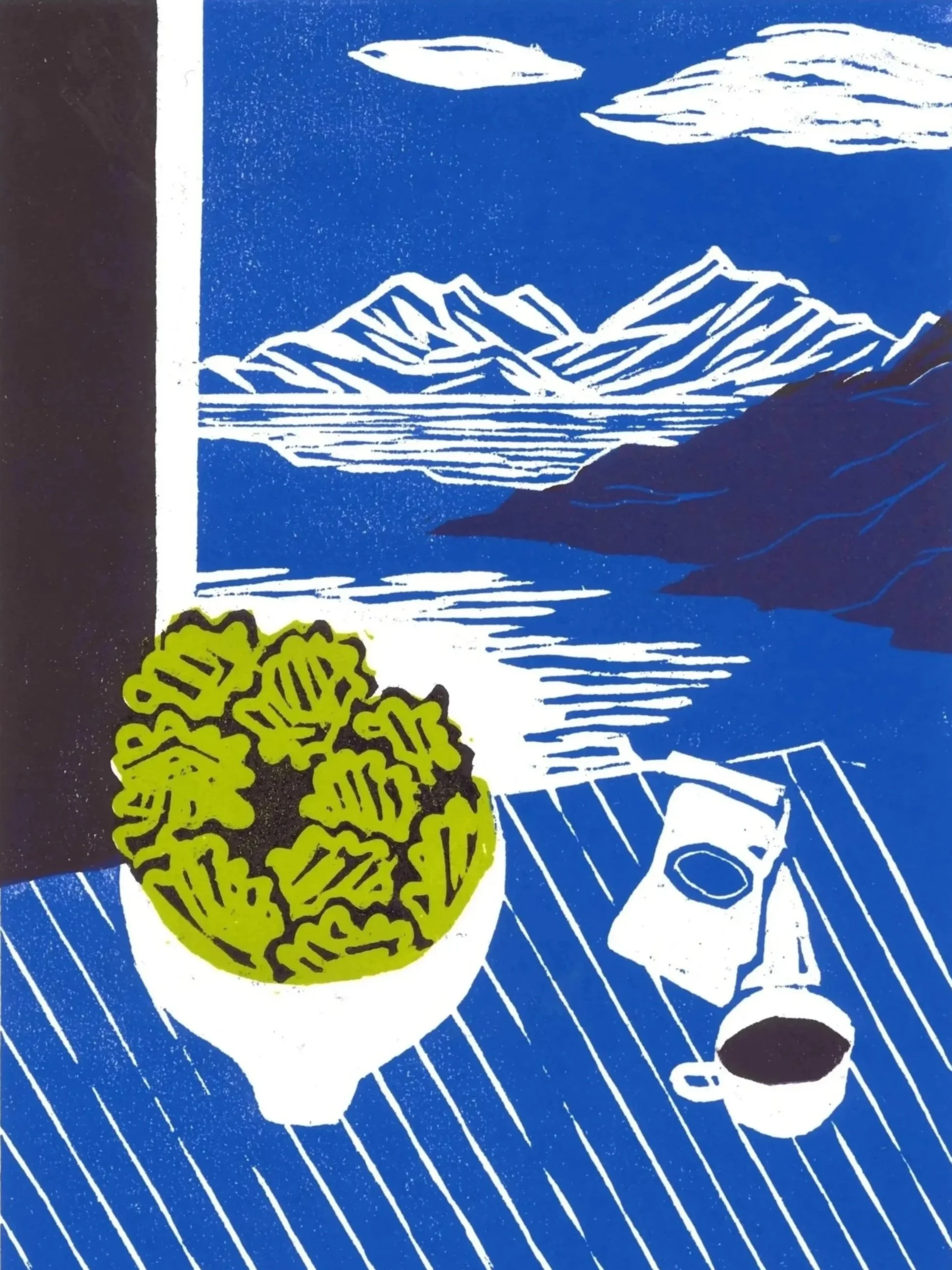
This single-edition lithograph, hand-pulled from a woodcut, depicts an imagined breakfast scene centered on a bowl of La Délicieuse Mousse—a playful nod to both moss and the quiet rituals of morning. Created by Paris-based artist Julia Chausson, the piece reflects her distinctive blend of lyricism and nature-infused imagery.
We first encountered Julia’s work on rue Saint-Michel in Paris, in the window of Librairie des Femmes, where she had illustrated a collection of short stories by Clarice Lispector—one of our favorite writers. Her poetic woodcuts immediately felt like a natural fit for Spring Moon Design’s Moss Collection.
The idea for this print grew out of a conversation about the many uses of moss. When we mentioned that in centuries past, people in Nordic countries used the lichen known as “Icelandic moss” to make porridge and flatbread, Julia imagined a domestic scene that merges the interior and exterior worlds. The result is a luminous cobalt composition, punctuated by a bowl of vivid green moss—a moment where the natural and domestic quietly intertwine.
About the Artist:
Julia Chausson was born and raised in Paris, where she also attended the School of Decorative Arts. She is the author of numerous children’s books and her colorful murals can be found in public spaces throughout Paris.
Origin: Paris, France
Materials: Single-edition lithograph on paper; walnut frame with beveled edge window mat, archival mounting with UV-protective glass
Dimensions: Print measures 13.5 in x 10 in (34 cm x 25 cm); frame measures 17.5 in x 14.5 in x 1 in (44.5 cm x 37 cm x 2.5 cm)
Weight: 1.5 lb (680 grams)
Edition: One of a kind, created exclusively for Spring Moon Design.

Handwoven and naturally dyed with wolf moss (Letharia vulpina), this 100% wool, handwoven, dark brown headband with an abstracted wave pattern was created exclusively for Spring Moon Design. It comes from Haida Gwaii, the ancestral homeland of the Indigenous Haida people of the Pacific Northwest. The luminous yellow-green lichen, gathered from local conifers, has long been used in Haida weaving, infusing textiles and regalia with color drawn directly from the forest.
We first encountered Haida art in Seattle, where totem poles, spruce-root baskets, and woven regalia left a lasting impression. Learning that wolf moss continues to play a role in Haida weaving, we sought out artist Ariane Xay Kuyaas Medley, who created a ghostface necklace for our Moss Collection. Ariane then introduced us to her mother, master weaver Alice Montjoy. From gathering the lichen to preparing the dye, Alice carries the process from start to finish: hand-dyeing the wool and weaving each headband with traditional Haida motifs, such as waves that echo the rhythms of nature.
Each headband is unique, reflecting the natural variation of the dye. Soft yet durable, it offers both heritage craftsmanship and contemporary wearability.
About the Artist:
Alice Montjoy is a Haida master weaver from Haida Gwaii, British Columbia. Alice harvests and prepares her own weaving materials.
Materials: Wolf moss-dyed wool
Dimensions: 9.5 in x 3.5 in (24 cm x 9 cm)
Weight: 2 oz (55 grams)
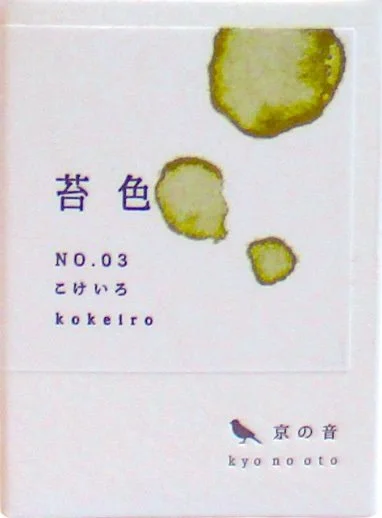
More than just ink, kokeiro—literally “moss color”—embodies Kyoto’s quiet harmony between nature and craft. Created by TAG Stationery in collaboration with the Kyoto Plant Dyeing Laboratory, this dye-based ink draws on centuries of color tradition to capture the tranquil beauty of moss-covered stones and temple gardens.
That it comes from Kyoto feels fitting: the city is home to the famed Moss Temple (Saihō-ji), where entry once required a reservation by postcard. Like the temple itself, Kokeiro reflects Japan’s reverence for moss, its endurance, subtlety, and serenity.
We discovered this ink at TAG Stationery’s flagship store in Kyoto—a stationery lover’s paradise of calligraphy pens, handmade papers, washi tapes, and charming card and envelope sets. We were immediately drawn to the beauty of the little white boxes with splashes of ink across the front.
Experimenting with Kokeiro’s green ink is a delight: the color reveals new tones in every light, much like moss itself. Dissolvable in water, it invites expressive writing, drawing, and washes.
Maker/s: TAG Stationery and the Kyoto Plant Dyeing Laboratory
Origin: Kyoto, Japan
Materials: 40 ml glass bottle and dye-based ink
Dimensions: 2 in x 1.5 in x 2.75 in (5 cm x 3.8 cm x 7 cm)
Weight: 5 oz (142 grams)
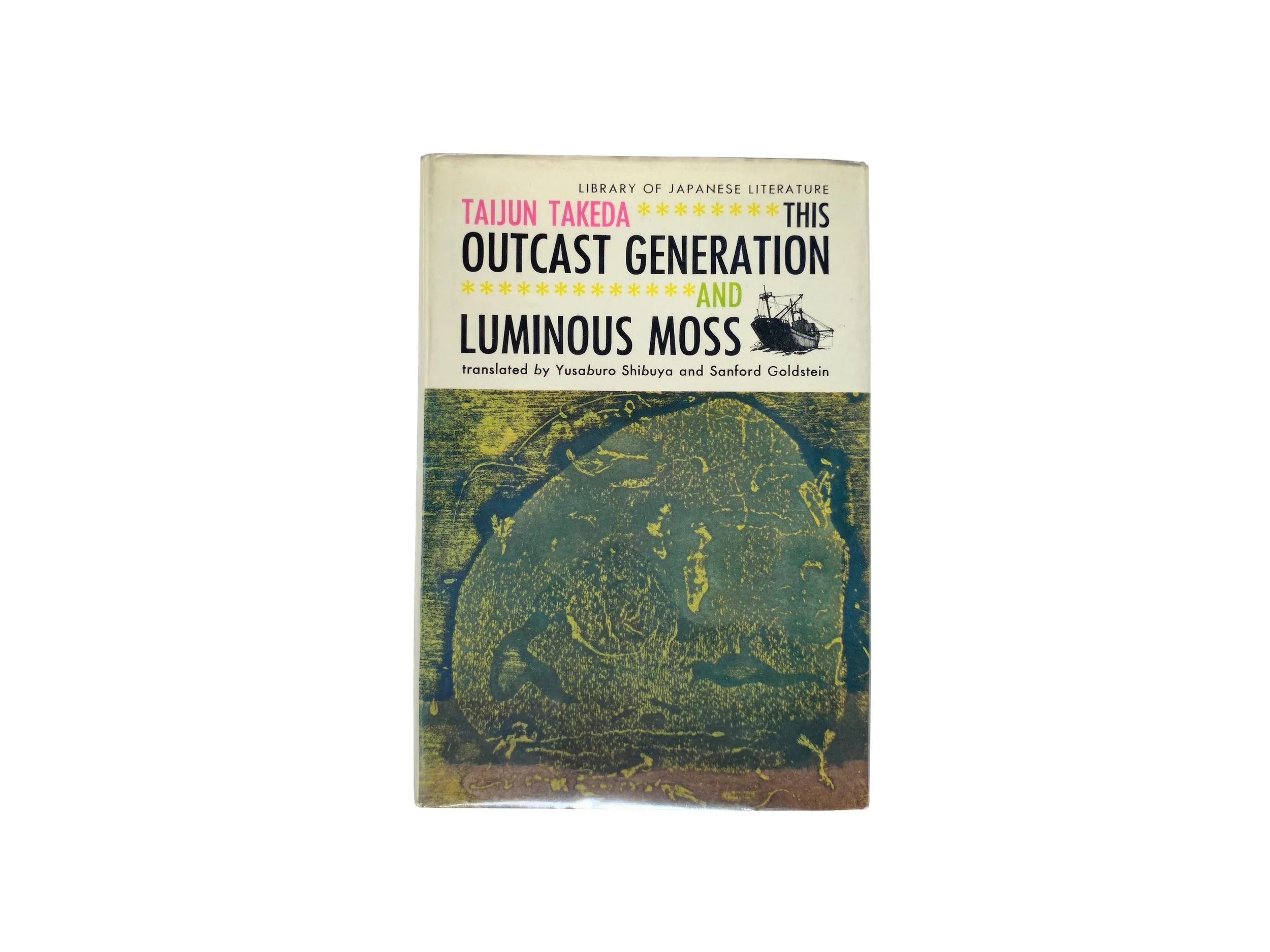
This rare English-language edition brings together two works by Taijun Takeda(1912–1976), This Outcast Generation and Luminous Moss. This haunting postwar novella recounts an incident of cannibalism that took place during World War II, exploring ethical questions related to moral responsibility and human behavior under extreme conditions.
The story begins in a cave on the northern island of Japan, where the narrator recounts an encounter with a mysterious glowing moss:
Instead of describing the glow of the moss as golden green, it would be more accurate to say that somehow the golden green moss was transformed into light itself.
Luminous Moss went on to inspire both an opera (1972) and a film (1992), weaving Takeda’s imagery of glowing moss into an allegory about memory, war, and human endurance.
Published by Charles E. Tuttle Company in 1967 and translated by Yusaburo Shibuya and Sanford Goldstein, it is bound in its original hardcover with a clear protective library-style dust jacket, this copy is exceptionally well-preserved for a first English edition. This volume also includes This Outcast Generation, about a young man from a defeated nation living in a foreign country, indifferent to the world, eliciting comparisons with Albert Camus’s The Stranger.
About the Author:
Taijun Takeda (1912–1976) was a novelist, playwright, and essayist, born in Tokyo. He studied Chinese literature, and later taught in Hokkaido, the northern island where his novella Luminous Moss unfolds.
Publisher: Charles E. Tuttle Company, 1967
Format: Hardcover with clear protective library-style dust jacket, 145 pages
Dimensions: 5.5 in x 7.5 in (14 cm x 19 cm)
Condition: Excellent
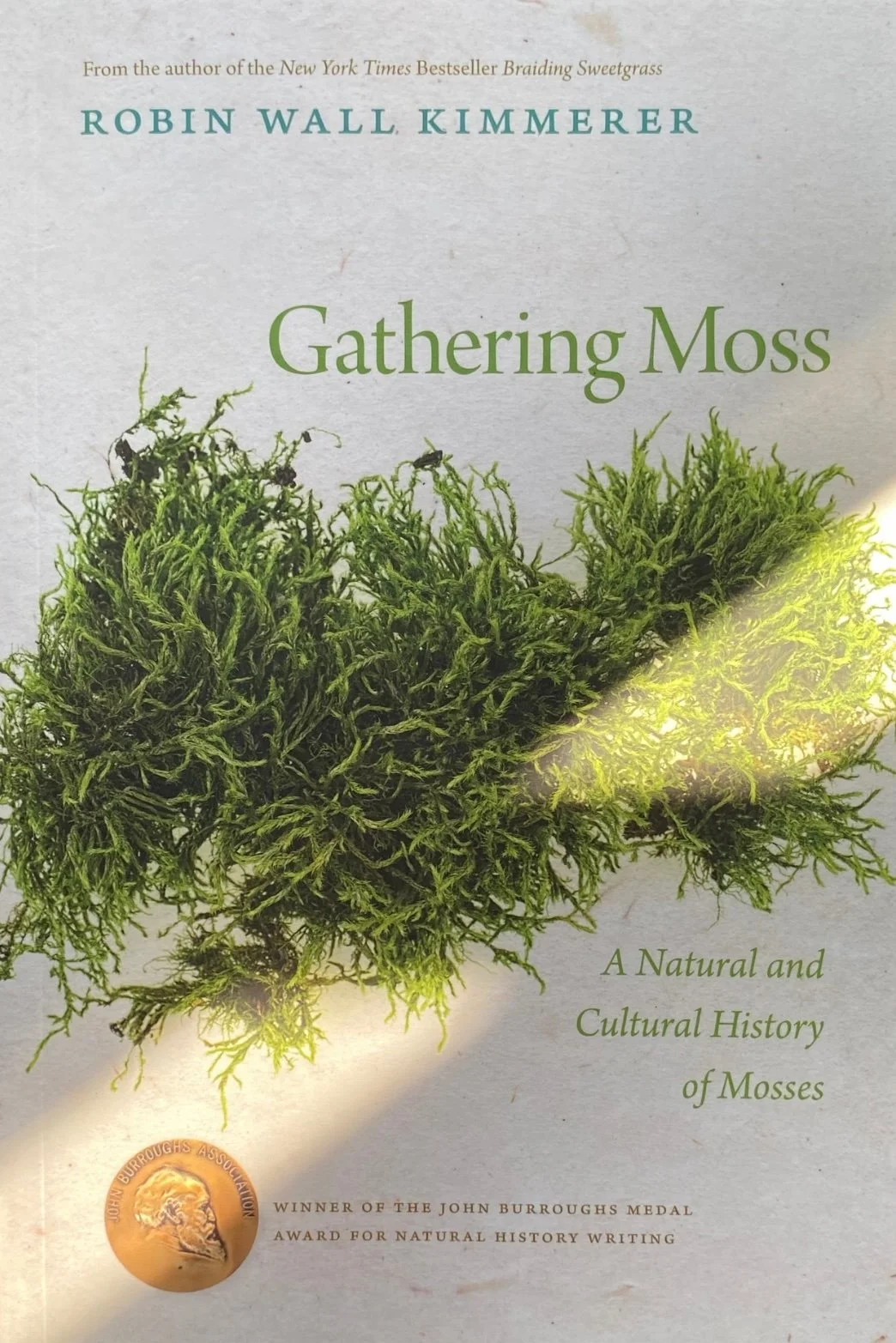
Mosses live quietly at the edges of our perception, carpeting forest floors, stones, and fallen logs. Though often overlooked, they offer lessons in resilience, beauty, and connection. Gathering Moss blends natural history with personal reflection, inviting readers into the intimate, intricate world of these ancient plants.
Through a series of linked essays, Robin Wall Kimmerer reveals how mosses grow, reproduce, and shape the ecosystems around them, while also reflecting on what they have to teach us about attention, belonging, and care. Her voice moves fluidly between science and story, weaving Indigenous ways of knowing with modern science.
About the Author:
Robin Wall Kimmerer is a professor at the SUNY College of Environmental Science and Forestry and founding Director of the Center for Native Peoples and the Environment. She is also the author of Braiding Sweetgrass: Indigenous Wisdom, Scientific Knowledge, and The Teachings of Plants (2013).
Publisher: Oregon State University Press, first edition 2003, reprint 2025
Format: Softcover, 176 pages
Dimensions: 6 in x 0.5 in × 9 in (15.25 cm x 1.25 cm x 23 cm)
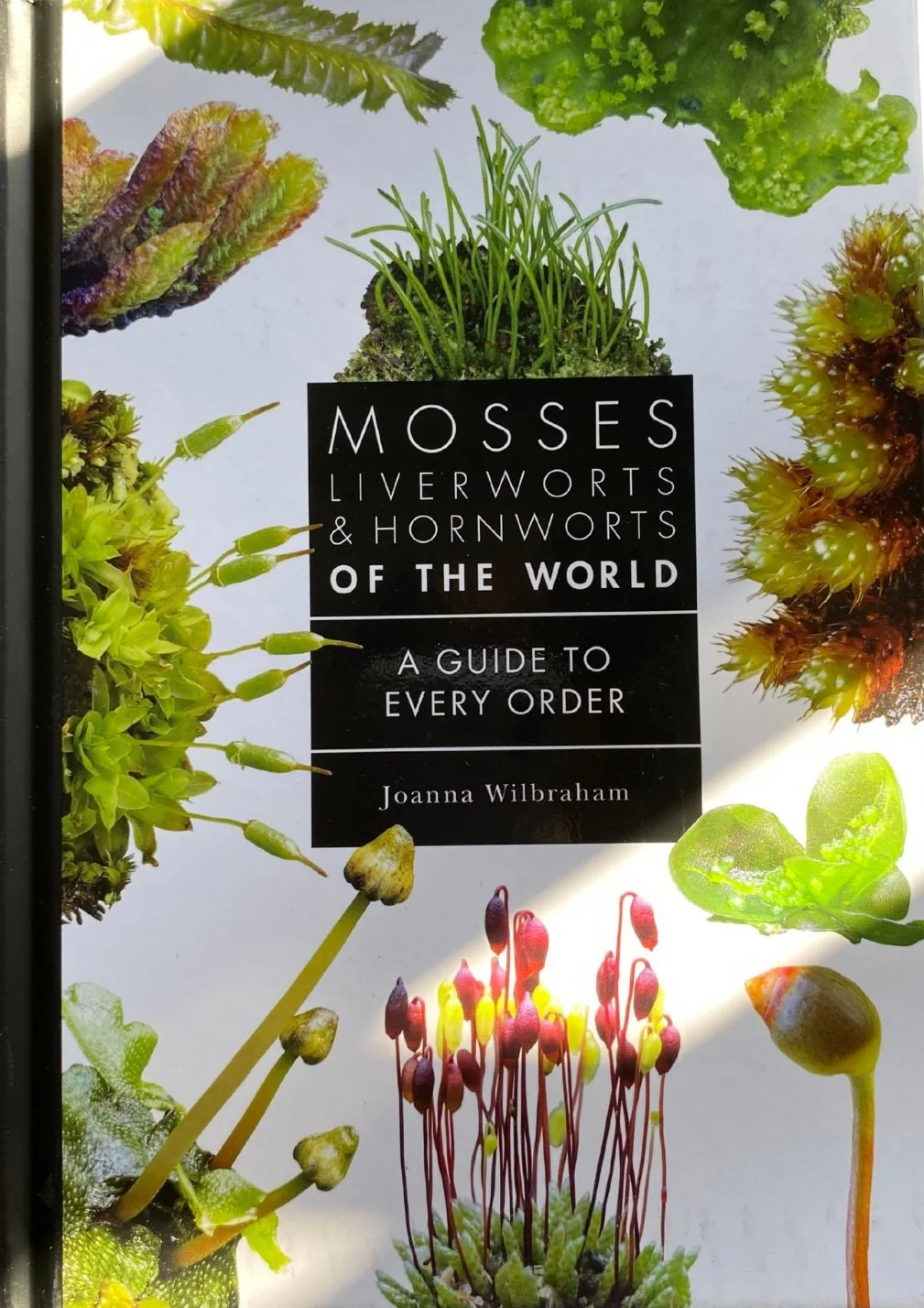
This recently released, gorgeously illustrated volume presents the evolutionary history, anatomy, and life cycles of bryophytes; the taxonomic family that includes mosses, liverworts, and hornworts.
Written by Joanna Wilbraham, Principal Curator at the Natural History Museum in London, the guide offers a rare combination of scientific authority, accessibility, and visual beauty. Mosses, liverworts, and hornworts are each profiled in depth, with maps and fact boxes, and hundreds of color photographs that emphasize their global diversity.
The book also includes a glossary, phylogenetic trees, and notes on conservation that underscore the importance of these underappreciated life forms, essential and beautiful in their quiet way.
About the Author:
Joanna Wilbraham is the Principal Curator at the Natural History Museum, London, where she manages the Moss Herbarium and leads the curatorial team for the Algae, Bryophyte, Lichen, and Slime Mould Collections. She has a PhD from University of Reading, UK.
Publisher: Princeton Architectural Press, 2025
Format: Hardcover, 240 pages
Dimensions:7 in x 0.75 in x 9.5 in (18 cm x 2 cm x 24 cm)
Condition: New

Mosses, Liverworts, and Hornworts: A Field Guide to Common Bryophytes of the Northeast by Ralph Pope is a beautifully organized and approachable guide to bryophytes in the northeastern United States. Compact yet thorough, it provides clear tools for identifying mosses, liverworts, and hornworts in the field.
Introductory chapters explain bryophyte biology, taxonomy, and ecology, tracing their lineage back to ancient green algae and the earliest plant life on land. The guide then proceeds in well-structured, color-coded sections: peat mosses (Sphagnaceae), upright acrocarpous mosses, mat-forming pleurocarpous mosses, liverworts, and the less-common hornworts. Each section begins with basic keys, habitat notes, and family traits, followed by individual species accounts in alphabetical order.
Lavishly illustrated with photographs, the book opens a window into the “miniature forests” beneath your feet.
About the Author:
Ralph Pope has a master’s degree in Environmental Studies from Antioch New England Graduate School, where he is an adjunct professor of northeastern flora. Pope is also the author of Lichens above Treeline: A Hiker’s Guide to Alpine Zone Lichens of the Northeastern United States.
Publisher: Cornell University Press, 2016
Format: Softcover, 368 pages
Dimensions: 6 in x 1 in x 9 in (15.25 cm x 2.5 cm x 23 cm)
Condition: New