

 Image 1 of 2
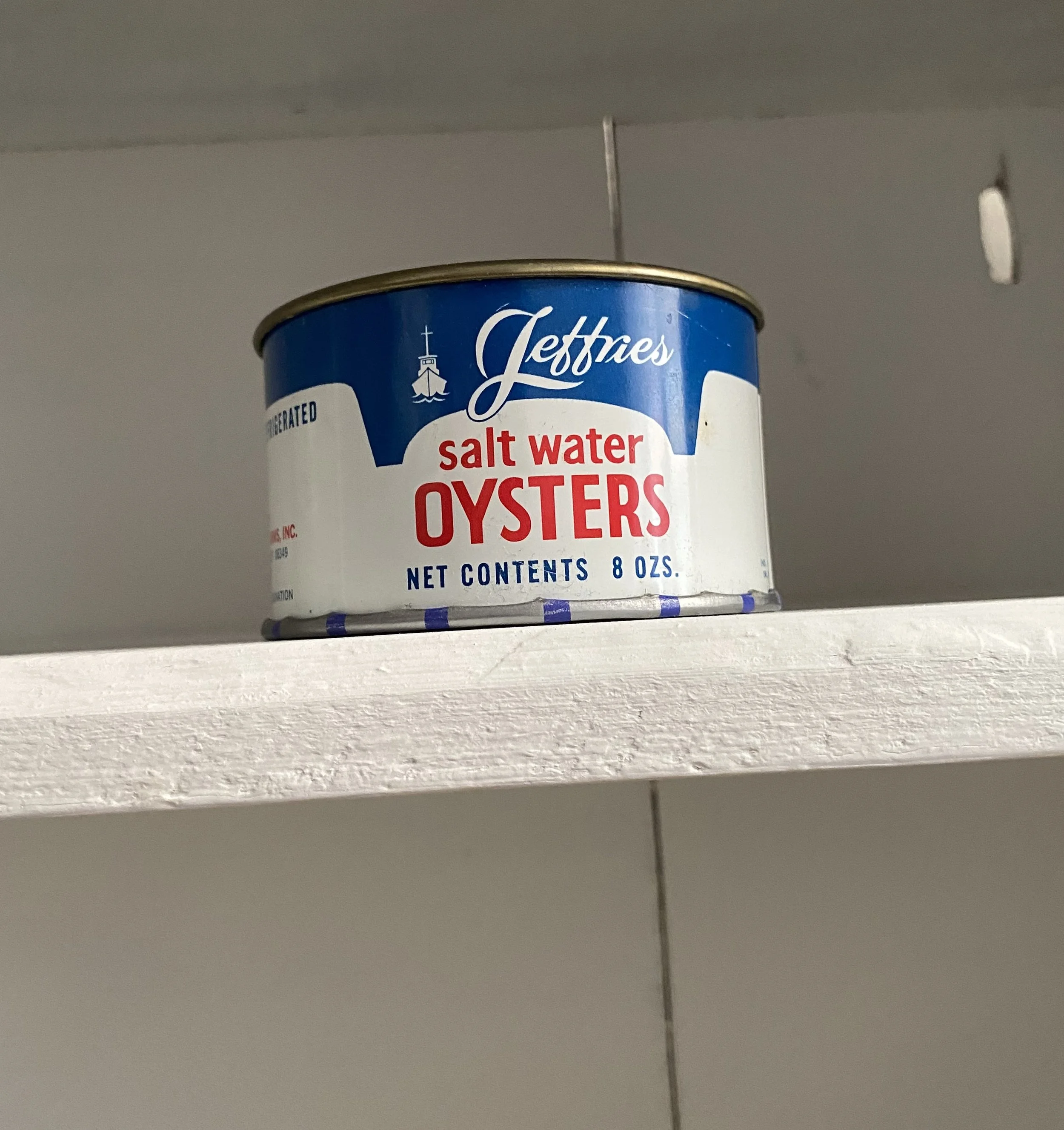 Image 2 of 2
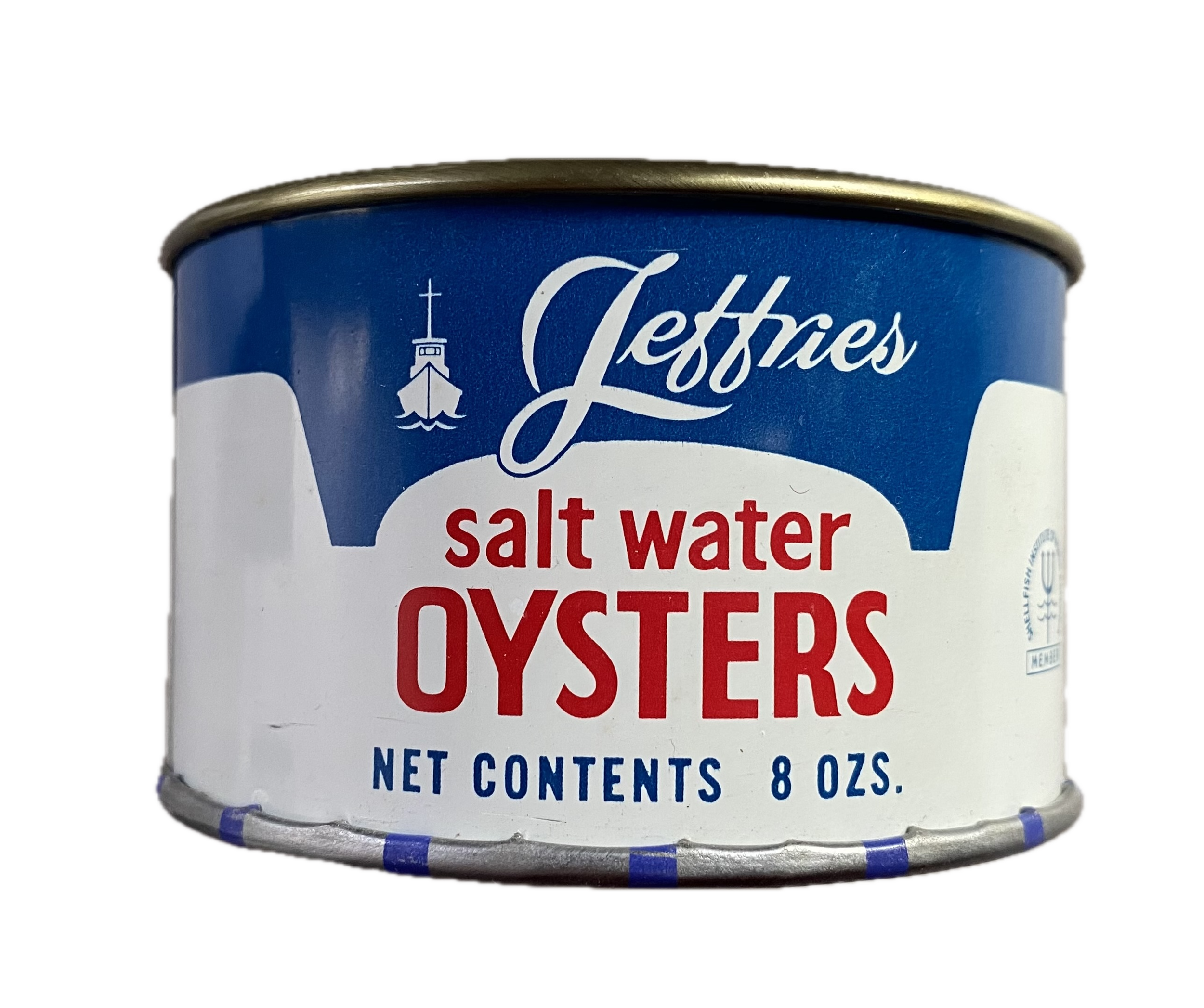
Jeffries Vintage Oyster Tin Can, 8 oz.
Bivalve, New Jersey, USA
Produced between the 1920s and 1960s at canneries along the Eastern seaboard, oyster tins once circulated widely in the United States.
In the nineteenth century canning technology and large-scale dredging emerged, converting oysters into an inexpensive, mass commodity. Such extensive oyster consumption depended on intensive labor. Immigrants, Black men and women, and—into the 1930s—children as young as five years old shucked and packed oysters for twelve hours a day, under hazardous conditions.
By the mid-twentieth century, overharvesting, pollution, and new packaging materials brought the oyster tin can era to a close.
8 oz., Bivalve, N.J., 8.5 cm x 5 cm high; 2 oz, 20 g
Jeffries Vintage Oyster Tin Can, 8 oz.
Bivalve, New Jersey, USA
Produced between the 1920s and 1960s at canneries along the Eastern seaboard, oyster tins once circulated widely in the United States.
In the nineteenth century canning technology and large-scale dredging emerged, converting oysters into an inexpensive, mass commodity. Such extensive oyster consumption depended on intensive labor. Immigrants, Black men and women, and—into the 1930s—children as young as five years old shucked and packed oysters for twelve hours a day, under hazardous conditions.
By the mid-twentieth century, overharvesting, pollution, and new packaging materials brought the oyster tin can era to a close.
8 oz., Bivalve, N.J., 8.5 cm x 5 cm high; 2 oz, 20 g